Get an extra 5% off on prepaid orders! COD available.

Jeans Size Chart & Fit Guide for Men Bootcut, Baggy, Straight, Barrel

1 min read

Jeans size chart men guides you to the right waist and length, while the best fit depends on the cut. Straight jeans sit evenly through the leg, bootcut jeans open slightly below the knee, and baggy or barrel styles add more room and shape. Measure first, then choose the fit that matches your build and preferred silhouette.
Finding the right pair is not only about knowing your waist measurement. The cut changes how denim looks and feels, from the clean line of straight jeans to the wider shape of baggy and barrel styles. At UNTLD, the denim collection brings these fits together, so knowing the difference makes your next choice much easier.
Jeans Size Chart Men: Start With the Right Measurements
Before choosing any denim fit, get your basic measurements right. A well-designed pair can only fit properly when the waist and length are appropriate for your body.
Measure Your Waist
Wrap a measuring tape around the area where you normally wear your jeans. Keep it comfortably close to the body without pulling it tight. The tape should remain level around your waist.
If you already own a pair of jeans that fits exceptionally well, you can also measure its waistband and compare that measurement with the brand's available sizing.
Measure Your Inseam
The inseam is the inside-leg measurement, running from the crotch seam to the bottom of the leg. It plays a major role in how jeans sit around your shoes.
A shorter inseam can create a cleaner break, while a longer inseam may create stacking, particularly with relaxed or baggy silhouettes.
Consider the Rise
Rise is the distance from the crotch seam to the top of the waistband. A higher rise sits closer to the natural waist, while a lower rise sits further down the hips.
Two jeans with the same waist measurement can therefore feel completely different because their rise and overall construction are different.
How to Read a Jeans Size Chart Men Can Actually Use
A jeans size chart men can rely on should be treated as a starting point rather than an absolute rule. Denim construction, fabric composition, rise, cut and personal preference can all influence the final fit.
For example, a 32-inch waist does not automatically mean every 32-inch pair will feel identical. A rigid denim pair may feel firmer than a pair with stretch, while a baggy cut can feel roomy through the thigh even though the waistband fits closely.
When comparing sizes, look at:
- Waist measurement
- Inseam or available length
- Rise
- Thigh room
- Leg opening
- Fabric stretch
- Intended fit
This is particularly important when switching between straight, bootcut, baggy and barrel jeans.
Straight Fit Jeans Men Can Wear Almost Anywhere
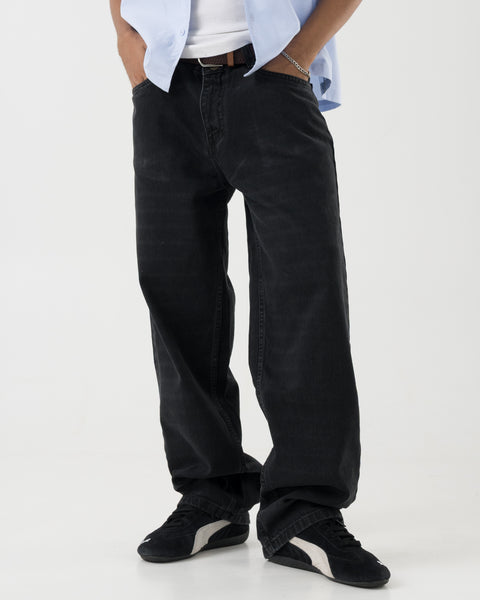
Straight fit jeans men often choose are popular because the silhouette is balanced and easy to style. The leg generally maintains a relatively consistent width from the thigh toward the hem instead of narrowing sharply.
The result is a classic shape that works with everyday T-shirts, shirts, jackets and sneakers.
UNTLD's Straight Fit Jeans (Ice Black) offer a darker, versatile direction, while Straight Fit Jeans (Black-Brown) adds a warmer tonal option. For a lighter look, Straight Fit Jeans (Haze Blue) brings the same straight-fit idea into a more relaxed colour story. These styles are part of UNTLD's current denim assortment.
How Should Straight Jeans Fit?
Straight jeans should feel comfortable around the waist and provide enough room through the seat and thigh without appearing excessively loose. The leg should fall naturally rather than cling tightly to the calves.
The hem should also work with your footwear. Too much excess fabric can make the silhouette look untidy, while an overly short length can interrupt the classic straight-leg line.
Bootcut Jeans for Men: What Makes the Fit Different?
Bootcut jeans for men are recognisable by their slightly wider opening from around the knee toward the hem. The design was historically associated with wearing boots underneath, but modern bootcut denim can work with many types of footwear.
The important distinction is that bootcut is not simply “loose jeans.” The extra width is concentrated toward the bottom of the leg.
UNTLD's Vintage Bootcut Denim (Sun-faded Blue) creates a faded everyday look, while Vintage Bootcut Denim (Washed Grey) offers a muted alternative. Other options in the collection include Vintage Bootcut Denim (Black Rinse), Vintage Bootcut Denim (Archive Blue), Vintage Bootcut Denim (Dust Blue), Vintage Bootcut Denim (Midnight Blue), Vintage Bootcut Denim (Mist Blue) and Vintage Bootcut Denim (Sky Blue).
How Should Bootcut Jeans Fit?
Bootcut jeans should generally fit comfortably through the waist, seat and thigh before opening gradually below the knee.
Avoid choosing a larger waist simply because you want a more pronounced bootcut effect. The shape should come from the construction of the jeans, not from wearing an oversized pair.
Learn, the difference between regular and straight fit jeans to choose the right fit for your body type and style.
Baggy Jeans: Roomy Without Looking Oversized
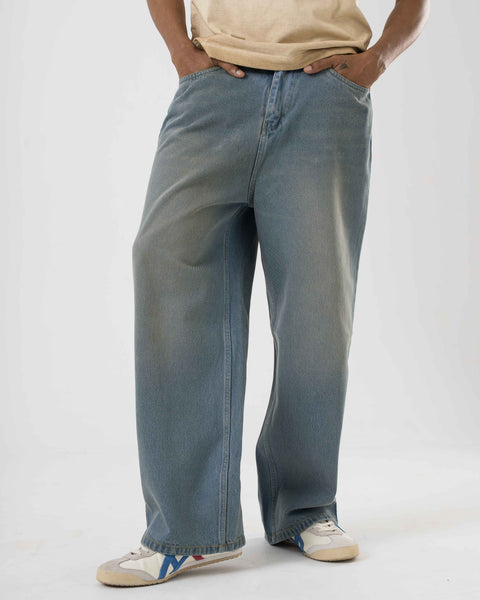
Baggy denim is designed to provide considerably more room through the leg. But “baggy” does not mean every part of the jeans should be loose.
A good baggy fit usually combines a secure waistband with additional space through the seat, thigh and leg. The proportions are what create the intended relaxed appearance.
UNTLD's Baggy Fit Denim (Black), Baggy Fit Denim (Dark Blue), Baggy Fit Denim (Black Rinse), Baggy Fit Denim (Dune Wash) and Baggy Fit Denim (Rustic Wash) represent different washes within the brand's baggy denim range. Baggy Fit Denim (Grey) is another option from the collection.
How Should Baggy Jeans Fit?
The waistband should stay comfortably in place without requiring a belt to prevent slipping. The seat and thighs should have visible room, and the legs should retain their relaxed shape.
If the waistband is loose but the thighs fit correctly, going up another size is usually not the solution. It can make the entire garment look unnecessarily oversized.
Barrel Jeans: The Curved Alternative
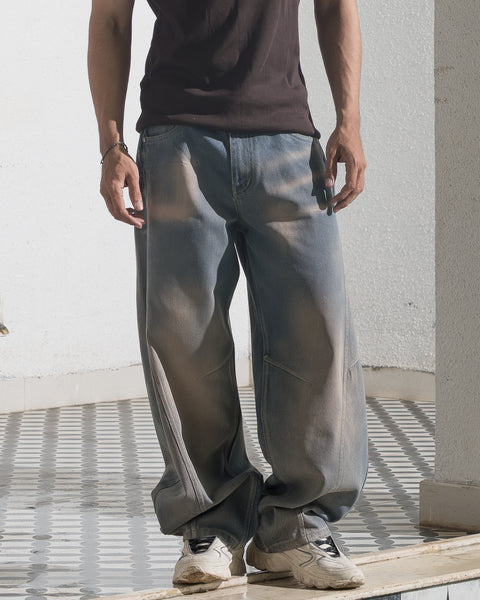
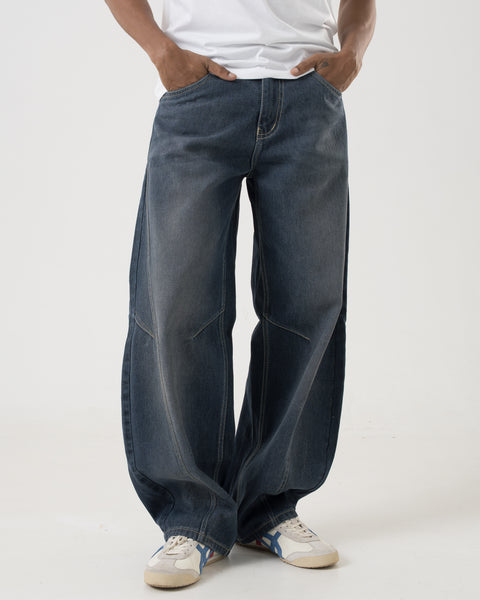
Barrel jeans offer a more distinctive silhouette than traditional straight or bootcut denim. Instead of following a completely straight line, the leg typically curves outward before narrowing toward the hem.
This creates a sculpted shape that can make an outfit look more fashion-forward without relying on extremely wide legs.
When choosing barrel denim, pay attention to proportion. The waist should remain secure, while the curved leg should have enough room to show the intended shape. Footwear also matters because a bulky shoe can visually balance a wider lower leg.
If you normally wear straight denim jeans, barrel jeans may initially feel different. That is part of their appeal: the silhouette changes while remaining wearable.
Jeans Size Chart Men: Should You Size Up or Down?
A jeans size chart men shoppers use can tell you measurements, but it cannot determine your personal preference for every fit.
For regular straight fit jeans, your regular waist is often the logical starting point. For baggy jeans, sizing up is not automatically necessary because the cut already provides additional room.
For bootcut jeans, focus on waist and thigh comfort first. For barrel jeans, make sure the waist is secure enough to support the wider leg shape.
You should consider sizing differently only when the garment's measurements, fabric behaviour, or desired fit justify it.
How Fabric Changes Your Jeans Fit
Fabric is an overlooked part of sizing.
Rigid denim tends to feel structured and can initially feel firmer around areas such as the waistband and thighs. Stretch denim generally offers greater flexibility, particularly when sitting or moving.
However, stretch should not be treated as permission to buy a smaller size automatically. Jeans that are uncomfortably tight at first may still remain uncomfortable even when the fabric has some give.
Check the product's fabric composition and use the manufacturer's measurement information wherever available.
Explore, types of pants for men for versatile styles that suit different occasions and personal preferences.
Jeans Size Chart Men: Common Fit Mistakes to Avoid
Even a reliable jeans size chart men can follow cannot fix an unsuitable silhouette. Avoid these common mistakes:
- Choosing jeans only by waist size.
- Ignoring inseam length.
- Assuming every brand's size fits identically.
- Sizing up just to make jeans look baggy.
- Wearing bootcut jeans with excessive fabric at the hem.
- Choosing straight jeans that are too tight through the thigh.
- Confusing relaxed, loose and baggy fits.
- Ignoring the rise.
- Judging fit only while standing.
- Forgetting to consider the shoes you normally wear.
Try sitting, walking and moving when checking a pair. Jeans should remain comfortable beyond the fitting-room mirror.
How to Choose Between Straight, Bootcut, Baggy and Barrel Jeans
Your choice ultimately depends on the silhouette you want.
- Choose straight jeans if you prefer a classic, balanced leg that works with everyday outfits.
- Choose bootcut jeans if you like a slightly flared hem and want denim that works naturally with boots or footwear with a stronger profile.
- Choose baggy jeans if comfort, volume, and a relaxed streetwear-inspired silhouette are your priorities.
- Choose barrel jeans if you want a more distinctive curved shape that feels contemporary and fashion-led.
There is no universally “best” fit. The best pair is the one that feels comfortable and creates the proportions you want.
Jeans Size Chart Men: A Simple Buying Checklist
Before placing an order, ask yourself five questions:
- What is my actual waist measurement?
- What inseam or length do I normally wear?
- Do I want a fitted, classic, or relaxed silhouette?
- How much room do I want through the thigh and leg?
- Will I wear the jeans with sneakers, boots, or another type of footwear?
This approach is more reliable than choosing a size based solely on what you normally buy.
UNTLD's denim collection currently spans Straight, Bootcut, Baggy, Barrel, and Wide Leg categories, giving shoppers several silhouettes to compare rather than forcing every outfit into one fit.
Find Your Fit With UNTLD
The right denim fit can change the entire proportion of an outfit. Instead of choosing jeans simply because a particular size has worked before, start with your measurements, understand the cut and decide how you want the finished silhouette to look.
Whether your preference is the clean structure of Straight Fit Jeans (Haze Blue), the distinctive shape of Vintage Bootcut Denim (Sun-faded Blue), or the relaxed attitude of Baggy Fit Denim (Dark Blue), the goal is the same: denim that feels right and looks intentional.
Explore UNTLD's denim range and find the fit that works for your wardrobe, your proportions and your personal style.
Frequently Asked Questions
Q1. How should men's jeans fit?
Men's jeans should fit securely at the waist, comfortably through the seat and thigh, and have a leg shape that matches the intended cut.
Q2. Can I size up for baggy jeans?
Yes, you can, but you usually do not need to. A purpose-built baggy cut already provides additional room through the leg.
Q3. Is a straight fit the same as a regular fit?
Not necessarily. “Straight” describes the leg shape, while “regular” can refer to the overall fit or sizing convention used by a brand.
Q4. Will bootcut jeans make legs look longer?
They can create a visually elongated line, especially when the hem falls cleanly over suitable footwear.
Q5. What size should I choose if I am between two sizes?
Check the garment's actual measurements and fabric composition. Choose based on your preferred fit and where you want the jeans to sit.
Q6. Why do jeans with the same waist size fit differently?
Rise, fabric, pattern, thigh width, leg shape and manufacturing differences can make two jeans with the same labelled waist feel different.
Q7. How do I know if baggy jeans are too big?
If the waistband slips, the seat looks excessively loose or the overall silhouette loses its intended proportions, the jeans may be too large.
Q8. What is the difference between bootcut, straight, baggy and barrel jeans?
Straight jeans maintain a relatively even leg shape, bootcut jeans widen toward the hem, baggy jeans offer more overall leg room, and barrel jeans create a curved leg silhouette.